Mixing modern and traditional design styles sounds risky. Get it wrong, and your home looks like a confused mess. Get it right, and you have a space that feels collected, personal, and timeless.
The secret? It’s not about following strict rules. It’s about finding balance and knowing which elements to mix and which to keep consistent.
Why Mix Styles at All
Sticking to just one style can make your home feel like a furniture showroom. Everything matches perfectly, but nothing feels personal or real.
Mixing styles gives your home character and depth. It tells a story about who you are and what you love. Maybe you inherited your grandmother’s antique dresser but love modern design. Maybe you appreciate clean lines but want your home to feel warm and cozy, not cold.
The best homes aren’t decorated in one single style. They’re layered with pieces from different eras and styles that somehow work together beautifully.
Start with a Neutral Foundation
This is the most important rule for mixing styles successfully. Your walls, floors, and other permanent elements should be neutral enough to work with both modern and traditional pieces.
Stick with neutral wall colors like white, cream, soft gray, or greige. Choose hardwood floors or neutral tile. Keep your window treatments simple.
When your backdrop is neutral, you have the freedom to mix furniture and decor without everything clashing.
Balance is Everything
For every traditional piece, add something modern. For every modern piece, add something with traditional warmth.
Let’s say you have a traditional velvet sofa. Pair it with a modern glass coffee table and contemporary art. The mix keeps things interesting.
Or maybe you love modern furniture. Soften it with traditional rugs, classic table lamps, and artwork in ornate frames.
The ratio doesn’t have to be exactly 50-50, but aim for somewhere between 60-40 and 70-30. If 80% of your stuff is traditional with just a few modern touches, it won’t feel mixed, it’ll feel traditional with some random modern pieces thrown in.
Match Your Undertones
Here’s a trick that makes mixing styles so much easier: keep your undertones consistent.
If your traditional pieces have warm undertones (think honey-colored wood, creamy whites, warm metallics like brass), choose modern pieces with warm undertones too.
If you’re going cool (gray woods, bright whites, silver and chrome), keep that tone throughout both your traditional and modern pieces.
When undertones match, different styles naturally look better together.
Repeat Similar Shapes
Look for shapes and lines that echo each other across different styles. This creates visual harmony even when the pieces are from completely different eras.
If your modern sofa has clean, straight lines, pair it with a traditional coffee table that also has some straight edges rather than one with lots of curves.
If you have a curvy traditional chair, balance it with modern decor that includes some rounded elements.
Use Color to Connect Everything
Color is your best friend when mixing styles. Choose a cohesive color palette and use it throughout your space, regardless of whether individual pieces are modern or traditional.
Let’s say your palette is navy, white, and brass. Use these colors in both your modern and traditional pieces. Your modern artwork might have navy in it. Your traditional rug might feature the same shade. Suddenly, everything feels intentional and connected.
Mix Materials Thoughtfully
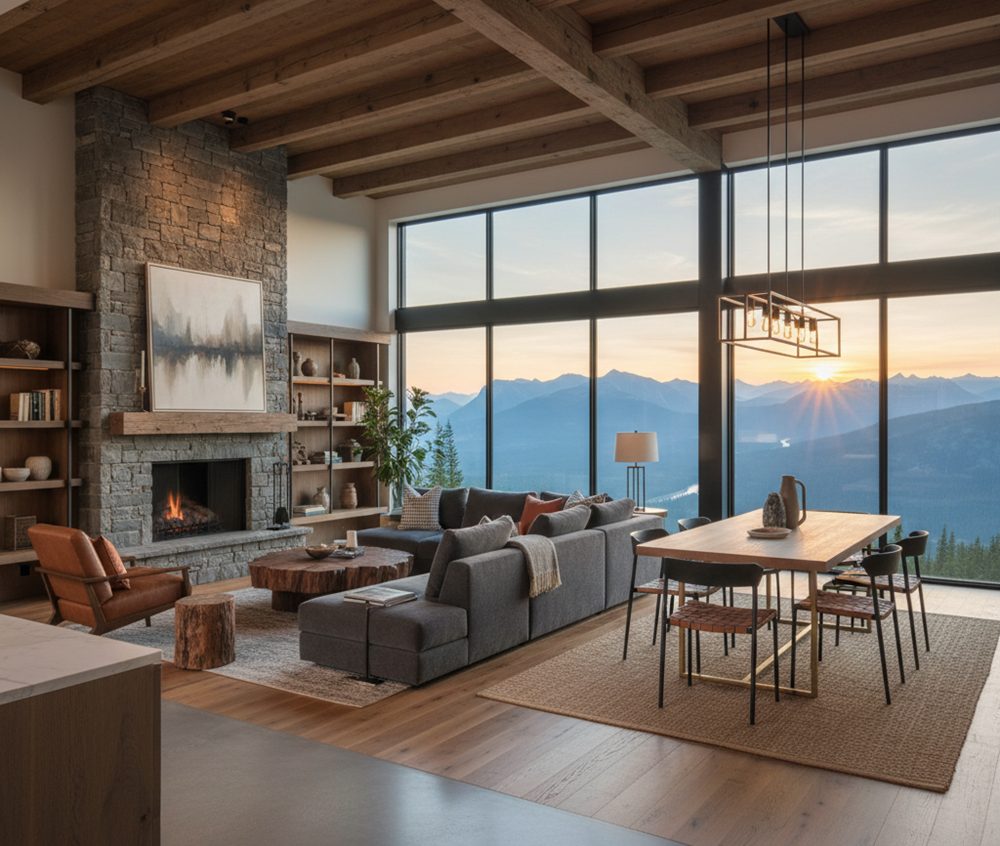
Different materials have different personalities. Wood feels warm and traditional. Glass and metal feel modern and sleek. Velvet and linen bridge both worlds.
The trick is to spread different materials throughout your space. Don’t put all the wood pieces on one side of the room and all the metal on the other.
A modern glass table next to a traditional wooden chair. A sleek metal lamp on an antique wood dresser. This kind of mixing feels natural and collected rather than divided.
Let One Style Take the Lead
Your space will feel more cohesive if one style is slightly dominant. This doesn’t mean everything should be that style, but there should be a clear direction.
Maybe 60% of your furniture is modern with traditional accents. Or maybe the bones of your room are traditional (like paneled walls and crown molding), but you’ve furnished it with mostly modern pieces.
Having a dominant style gives your space a clear identity while the mixed elements add interest and personality.
Don’t Forget About Scale
Modern furniture tends to be low and streamlined. Traditional furniture is often taller and more substantial. When you’re mixing both, pay attention to scale.
If you have a low modern sofa, don’t pair it with a massive traditional armoire unless you have very high ceilings. The size difference will feel awkward.
Mix pieces of similar scale, or use one large statement piece with several smaller items from the other style.
Trust Your Gut
Rules are helpful, but at the end of the day, you need to trust your own eye. If you put two pieces together and something feels off, it probably is even if they “should” work on paper.
Step back and look at your space from different angles. Take photos on your phone. Sometimes you can see things in a photo that you miss in person.
Live with your choices for a few days before committing. Sometimes a combination that feels weird at first grows on you. Other times, it continues to bother you, and that’s your answer.
Start Small and Build
You don’t have to mix styles in every room or even throughout an entire room right away. Start with one small area.
Try mixing styles on a bookshelf. Traditional books and vintage objects next to modern vases and geometric decor. If that works and you like it, expand from there.
Or start with your coffee table styling. A modern tray holding traditional candlesticks and a vintage bowl. Easy to change if it doesn’t work, but it gives you practice with the concept.
Common Mistakes to Avoid
Don’t match your wood tones exactly. A room where every piece of wood is the exact same color looks stiff. Mix different wood tones, just keep the undertones consistent (all warm or all cool).
Don’t mix too many styles. Modern and traditional is enough. Throw in rustic, industrial, and bohemian too, and you’ve gone from collected to cluttered.
Don’t be too literal. You don’t need a modern piece and a traditional piece of every single type of furniture. Mix the overall feel of the room, not individual pairs.
The Result You’re After
When you’ve successfully mixed modern and traditional styles, your home should feel layered and interesting. It should look like it came together over time, not like everything was bought in one weekend.
People should walk in and feel comfortable, not like they’re in a museum. The space should have personality and warmth while still feeling current and fresh.
Most importantly, it should feel like you. Your home should tell your story, and that story probably includes both old and new, traditional and modern, classic and contemporary.
That’s the beauty of mixing styles. You’re not limited to one narrow vision. You get to create a space that’s uniquely yours.
Discover more from Home Design Folio
Subscribe to get the latest posts sent to your email.